

 PDF
PDF  Views
Views  Share
Share


Periodontitis and Its Role in Oral Cancer Susceptibility: A Case-Control Study
CC BY 4.0 · Indian J Med Paediatr Oncol 2025; 46(03): 305-311
DOI: DOI: 10.1055/s-0044-1792133
Abstract
Introduction Oral cancer and periodontitis are complex, multifactorial diseases, influenced by common risk factors such as genetic predisposition, lifestyle choices, and oral health practices. While certain studies indicate a positive correlation between periodontitis and oral cancer, the precise mechanisms and causation remain unclear.
Objective This study aims to determine if individuals with periodontitis have a heightened risk of developing oral cancer compared with those with healthy periodontal conditions.
Materials and Methods One hundred and twenty-six participants, 63 with oral cancer and 63 without oral cancer, were enrolled. A structured questionnaire was developed to gather data on demographics, socioeconomic status, lifestyle risk factors, dietary habits, periodontal condition, oral hygiene practices, and complete oral health status. Statistical analysis used chi-squared and Mann–Whitney U tests and logistic regression to understand potential influences on oral cancer development.
Results Notable associations were identified between oral cancer occurrence and specific socioeconomic factors and lifestyle behaviors, including gender, age, education level, and tobacco and alcohol usage. Average Silness and Loe plaque index values, probing pocket depth, and clinical attachment loss values were significantly higher in cases than controls. Patients with periodontitis exhibited a higher incidence of oral cancer (63.9%) compared with those without periodontitis (32.4%).
A substantial majority of oral cancer patients (72.9%) exhibited stage 4 periodontitis, contrasting with controls (30.6%).
Conclusion Periodontitis emerges as a significant individual risk factor influencing oral cancer development. Rigorous monitoring is recommended for individuals with compromised periodontal health, particularly with severe periodontitis and concurrent risk factors. Prioritizing preservation of periodontal health in high-risk individuals holds promise for mitigating oral cancer–associated risks.
Publication History
Article published online:
21 November 2024
© 2024. The Author(s). This is an open access article published by Thieme under the terms of the Creative Commons Attribution License, permitting unrestricted use, distribution, and reproduction so long as the original work is properly cited. (https://creativecommons.org/licenses/by/4.0/)
Thieme Medical and Scientific Publishers Pvt. Ltd.
A-12, 2nd Floor, Sector 2, Noida-201301 UP, India
- Low Levels of Tumor Necrosis Factor-α will Prevent Periodontitis Exacerbation in Type 2 Diabetes MellitusTitiek Berniyanti, European Journal of Dentistry, 2022
- Interferon-Gamma (IFNg) +874A/T Polymorphism Does Not Significantly Affect the Severity of PeriodontitisChaerita Maulani, European Journal of Dentistry, 2021
- Periostin: Immunomodulatory Effects on Oral DiseasesZohaib Khurshid, European Journal of Dentistry
- Periostin: Immunomodulatory Effects on Oral DiseasesZohaib Khurshid, VCOT Open
- Evaluation of Osteocalcin Levels in Saliva of Periodontitis Patients and Their Correlation with the Disease Severity: A Cross-Sectional StudyHamda Shazam, European Journal of Dentistry
- Systemic antibiotics increase microbiota pathogenicity and oral bone loss<svg viewBox="0 0 24 24" fill="none" xmlns="http://www.w3.org/2000/svg">
- Emerging roles of exosomes in oral diseases progression<svg viewBox="0 0 24 24" fill="none" xmlns="http://www.w3.org/2000/svg">
- Nitrate reduction capacity of the oral microbiota is impaired in periodontitis: potential implications for systemic nitric oxide availability<svg viewBox="0 0 24 24" fill="none" xmlns="http://www.w3.org/2000/svg">
- The neutrophil–osteogenic cell axis promotes bone destruction in periodontitis<svg viewBox="0 0 24 24" fill="none" xmlns="http://www.w3.org/2000/svg">
- Periodontitis exacerbates pulmonary hypertension by promoting IFNγ+ T cell infiltration in mice<svg viewBox="0 0 24 24" fill="none" xmlns="http://www.w3.org/2000/svg">
Abstract
Introduction Oral cancer and periodontitis are complex, multifactorial diseases, influenced by common risk factors such as genetic predisposition, lifestyle choices, and oral health practices. While certain studies indicate a positive correlation between periodontitis and oral cancer, the precise mechanisms and causation remain unclear.
Objective This study aims to determine if individuals with periodontitis have a heightened risk of developing oral cancer compared with those with healthy periodontal conditions.
Materials and Methods One hundred and twenty-six participants, 63 with oral cancer and 63 without oral cancer, were enrolled. A structured questionnaire was developed to gather data on demographics, socioeconomic status, lifestyle risk factors, dietary habits, periodontal condition, oral hygiene practices, and complete oral health status. Statistical analysis used chi-squared and Mann–Whitney U tests and logistic regression to understand potential influences on oral cancer development.
Results Notable associations were identified between oral cancer occurrence and specific socioeconomic factors and lifestyle behaviors, including gender, age, education level, and tobacco and alcohol usage. Average Silness and Loe plaque index values, probing pocket depth, and clinical attachment loss values were significantly higher in cases than controls. Patients with periodontitis exhibited a higher incidence of oral cancer (63.9%) compared with those without periodontitis (32.4%).
A substantial majority of oral cancer patients (72.9%) exhibited stage 4 periodontitis, contrasting with controls (30.6%).
Conclusion Periodontitis emerges as a significant individual risk factor influencing oral cancer development. Rigorous monitoring is recommended for individuals with compromised periodontal health, particularly with severe periodontitis and concurrent risk factors. Prioritizing preservation of periodontal health in high-risk individuals holds promise for mitigating oral cancer–associated risks.
Keywords
periodontitis - oral cancer - risk factors - chronic inflammation - tobaccoIntroduction
Periodontal diseases constitute a prevalent oral health issue affecting over 50%-of the Indian population. While these conditions can impact individuals of all ages, their likelihood increases with advancing age.[1] The widespread occurrence of periodontal diseases poses an important public health challenge due to their adverse effects on oral health, including tooth loss, disability, aesthetic concerns, and masticatory issues. Moreover, these conditions can have systemic consequences and may contribute to undernourishment. The psychosocial and economic implications of periodontal diseases are substantial.[2] Many research studies have emphasized the connection between periodontitis and a range of systemic illnesses, such as diabetes, cardiovascular conditions, and adverse pregnancy outcomes. Furthermore, emerging evidence suggests a connection between periodontal disease and oral cancer (OC).[3]
Both periodontitis and OC share established risk factors, including smoking, tobacco use, alcohol consumption, poor oral hygiene (OH), unhealthy diet, age, systemic conditions like diabetes, autoimmune diseases, certain medications, bacterial infections, and genetic predisposition. Despite the shared risk factors contributing to both diseases, the specific mechanisms and their influence can vary.[4] Persistent inflammation in the mouth, frequently linked to periodontal conditions, is regarded as a separate risk factor for OC, as it can lead to deoxyribonucleic acid (DNA) damage, cell proliferation, and creation of a microenvironment conducive to the growth and survival of cancer cells. Furthermore, distinct risk factors and condition-specific elements play crucial roles in the onset and progression of each oral health issue. Recognizing these distinctions is crucial for the prevention, early detection, and effective management of gum disease and OC.[5] In this study, a reliable radiographic index (RI) assessing interproximal alveolar bone loss (iABL) in conjunction with clinical screening tools is included, providing a comprehensive approach to understanding the oral health status of individuals. The study aims to assess the association between periodontal disease and the potential risk of OC development within the population of Bengaluru city, India.
Materials and Methods
Study Design
This study is a case-control study conducted in our in our faculty involving oral squamous cell carcinoma (OSCC) patients recruited from the department database between January 2020 and January 2024, based on histological confirmation.
Inclusion Criteria
The study enrolled 126 participants (63 with OC and 63 controls) ranging in age from 18 to 90 years. Among them, 63 patients were in the case group, diagnosed with OSCC based on histological confirmation, and were recruited from the department database between January 2020 and January 2024. The control group consisted of 63 age- and sex-matched individuals without a history of OC, recruited from the outpatient section.
Exclusion Criteria
Patients with cancers other than OSCC and patients with a history of jaw resection as a part of cancer therapy were excluded from the study.
Questionnaire
A comprehensive questionnaire was designed to collect data on demographic information, socioeconomic status, risk factors, detailed dental and medical history, site of OC, and various parameters related to potential risk factors and confounding variables.
Assessment of Dental and Oral Health
The decayed, missing, and filled teeth (DMFT) index was employed to evaluate dental health and the extent of dental caries. The Silness–Löe plaque index (SLPI) was utilized to assess OH status. Periodontal condition was evaluated through measurements of probing pocket depth (PPD) and clinical attachment loss (CAL) at six locations on each tooth. The average data for bleeding on probing (BOP) were subsequently computed. Periodontitis severity was categorized according to the criteria set forth by the World Workshop on the Classification of Periodontal and Peri-Implant Diseases and Conditions in 2018. Apart from the clinical evaluations, an RI was employed to assess the extent and severity of iABL relative to the lengths of individual roots. This approach utilized available panoramic radiographs to conduct a thorough assessment. Patients were briefed about the study's objectives, and written consent was obtained from all participants. The primary cancer-related treatment for the patients was managed appropriately. Referrals were made for any required conservative dental or periodontal treatment.
Primary Outcome
The primary outcome of this study was to determine the association between periodontitis and OC susceptibility.
Secondary Outcome
The primary outcome of this study was to assess the periodontal status and other oral health parameters (PPD, CAL, BOP percentage, SLPI, and DMFT index, radiographic assessment of alveolar bone loss) among individuals with OC compared with controls.
Statistical Analysis
Statistical analysis was conducted using SPSS Statistics 18 software (IBM Corporation), utilizing the chi-squared and Mann–Whitney U tests and logistic regression. Statistical significance was determined at a p-value of less than 0.05.
Ethical Approval
Ethics committee approval was obtained from the institutional ethics committee, dated January 4, 2020, with reference number EC 2020/PG/081. The procedures followed were in accordance with the ethical standards of the responsible committee on human experimentation and with the Declaration of Helsinki 1964, as revised in 2013. Waiver of informed patient consent was obtained from the ethics committee.
Results
Patients with periodontitis exhibited a higher incidence of OC (63.9%) compared with those without periodontitis (32.4%). A substantial majority of OC patients (72.9%) exhibited stage 4 periodontitis, contrasting with controls (30.6%). Significant associations were identified among age groups, education, tobacco use, alcohol consumption, and diet about case and control groups. The incidence of OSCC was higher among individuals older than 45 years compared with those younger than 45 years. The occurrence of OSCC was more among the patients/participants with lower levels of formal education as compared with patients/participants with higher education and employment. However, occupation and marital status did not prove to be significant factors. The calculated p-value of approximately 0.000102 for tobacco use strongly suggests a substantial association, indicating a connection between tobacco use and variations in the distribution of cases and controls. A total of 77.7%-were current tobacco users among cases as compared with 38.5%-among controls. Those who consumed more than 20 cigarettes or sachets of smokeless tobacco (SLT) per day exhibited elevated rates of OC. No significant correlation was found between passive smoking and the occurrence of OC. Percentage of daily alcohol consumption among cases was 56.79%-as compared with 23.85%-in controls. A notable correlation was observed between the incidence of OSCC and the quantity of alcohol consumption (p = 0.027; [Table 1]). In our study, excessive alcohol consumption emerged as an independent risk factor for the onset of OC.
|
Variables |
Cases |
Controls |
p -value |
|
|---|---|---|---|---|
|
Age (y) |
>45 |
45 |
20 |
< 0.001 |
|
< 45 |
18 |
43 |
||
|
Gender |
Male |
36 |
36 |
> 0.05 |
|
Female |
27 |
27 |
||
|
Education |
Elementary school |
42 |
7 |
< 0.05 |
|
High school |
14 |
20 |
||
|
Degree |
7 |
36 |
||
|
Occupation |
Employed |
18 |
27 |
> 0.05 |
|
Unemployed |
12 |
9 |
||
|
Home maker |
19 |
14 |
||
|
Student |
1 |
1 |
||
|
Retired |
13 |
12 |
||
|
Marital status |
Single |
16 |
11 |
> 0.05 |
|
Married |
30 |
39 |
||
|
Widowed/divorced |
17 |
13 |
||
|
Tobacco |
Smoking |
18 |
10 |
< 0.05 |
|
Smokeless |
27 |
18 |
||
|
Both |
4 |
0 |
||
|
Never |
11 |
33 |
||
|
Alcohol consumption |
Daily |
32 |
15 |
0.027 |
|
Weekly |
20 |
19 |
||
|
Monthly |
4 |
9 |
||
|
Never |
7 |
20 |
||
|
Diet |
Vegetarian |
29 |
45 |
0.72 |
|
Nonvegetarian |
34 |
18 |
|
Periodontitis stage |
Cases |
Controls |
p value |
|---|---|---|---|
|
I |
2 |
1 |
< 0.05 |
|
II |
4 |
0 |
< 0.05 |
|
III |
27 |
18 |
0.02 |
|
IV |
27 |
5 |
< 0.05 |
|
CAL (mm) |
6.2 ± 1.3 |
2.8 ± 1.1 |
< 0.05 |
|
PPD (mm) |
5.6 ± 1.3 |
2.5 ± 1.1 |
< 0.05 |
|
RI (iABL) |
Codes 3 and 4 |
Codes 2 and 3 |
< 0.05 |
|
BOP (%) |
45.9 ± 27 |
27.9 ± 18.9 |
< 0.05 |
|
SLPI |
2.7 ± 0.9 |
1.3 ± 0.9 |
< 0.05 |
|
DMFT index |
24.7 ± 9 |
13.2 ± 8.01 |
< 0.05 |
|
Completely edentulous |
6 |
3 |
> 0.05 |
References
Address for correspondence
Publication History
Article published online:
21 November 2024
© 2024. The Author(s). This is an open access article published by Thieme under the terms of the Creative Commons Attribution License, permitting unrestricted use, distribution, and reproduction so long as the original work is properly cited. (https://creativecommons.org/licenses/by/4.0/)
Thieme Medical and Scientific Publishers Pvt. Ltd.
A-12, 2nd Floor, Sector 2, Noida-201301 UP, India
- Low Levels of Tumor Necrosis Factor-α will Prevent Periodontitis Exacerbation in Type 2 Diabetes MellitusTitiek Berniyanti, European Journal of Dentistry, 2022
- Periostin: Immunomodulatory Effects on Oral DiseasesZohaib Khurshid, VCOT Open
- Periostin: Immunomodulatory Effects on Oral DiseasesZohaib Khurshid, European Journal of Dentistry
- Interferon-Gamma (IFNg) +874A/T Polymorphism Does Not Significantly Affect the Severity of PeriodontitisChaerita Maulani, European Journal of Dentistry, 2021
- Evaluation of Osteocalcin Levels in Saliva of Periodontitis Patients and Their Correlation with the Disease Severity: A Cross-Sectional StudyHamda Shazam, European Journal of Dentistry
- FRI0698 Prevotella and alloprevotella species characterize the oral microbiome of early rheumatoid arthritis<svg viewBox="0 0 24 24" fill="none" xmlns="http://www.w3.org/2000/svg">
- Periodontitis in early and chronic rheumatoid arthritis: a prospective follow-up study in Finnish population<svg viewBox="0 0 24 24" fill="none" xmlns="http://www.w3.org/2000/svg">
- P59 Relationship between oral health and hypertension in adolescents<svg viewBox="0 0 24 24" fill="none" xmlns="http://www.w3.org/2000/svg">
- OP0110 A COHORT STUDY ON THE BIDIRECTIONAL RELATIONSHIP BETWEEN PERIODONTITIS AND OSTEOARTHRITIS OVER A 15-YEAR FOLLOW-UP<svg viewBox="0 0 24 24" fill="none" xmlns="http://www.w3.org/2000/svg">
- Periodontitis in patients with diabetes and its association with diabetes-related complications. A register-based cohort study<svg viewBox="0 0 24 24" fill="none" xmlns="http://www.w3.org/2000/svg">
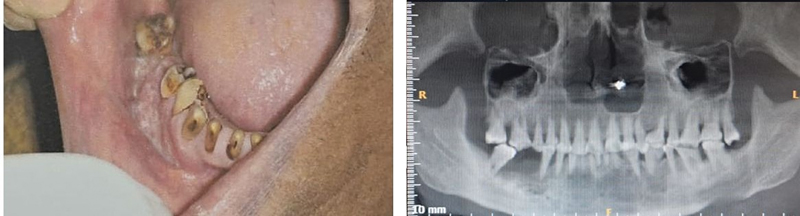
| Fig 1 : Clinical and radiographic image of a 54-year-old female patient with cancer of the lower right alveolus with no known risk factors apart from periodontitis.
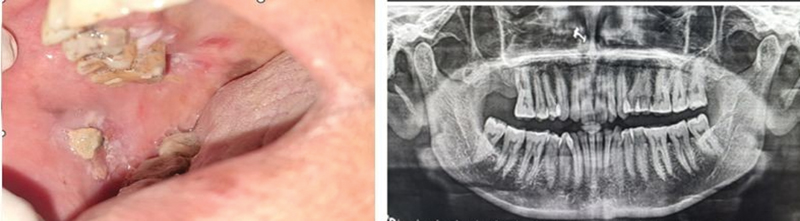
| Figure 2: Clinical and radiographic images of a 36-year-old female patient with cancer of the upper right alveolus with no known risk factors other than periodontitis.
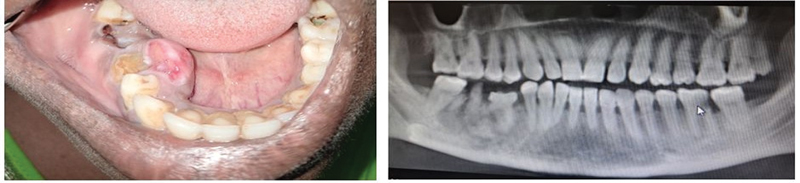
| Figure 3: Clinical and radiographic images of a 48-year-old female patient with cancer of the lower right alveolus and the floor of the mouth with no known risk factors other than periodontitis.
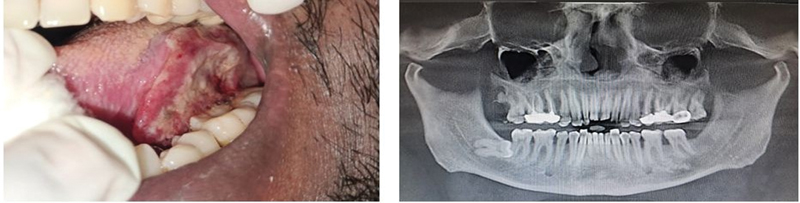
| Figure 4: Clinical and radiographic images of a 40-year-old male patient with cancer of the left lateral border of the tongue and the floor of the mouth with no known risk factors other than periodontitis.