

 PDF
PDF  Views
Views  Share
Share


Volasertib in Cancer Therapy: From Mechanism to Clinical Potential
CC BY 4.0 · Indian J Med Paediatr Oncol 2026; 47(03): 165-169
DOI: DOI: 10.1055/s-0046-1819569
Abstract
Volasertib is a second-generation, selective inhibitor of polo-like kinase 1 (PLK1), created for targeted therapy in cancer treatment, particularly acute myeloid leukemia (AML). PLK1 plays a crucial role in regulating mitosis and is often overexpressed in cancerous cells, which makes it a promising target for therapy. By inhibiting PLK1-mediated progression through mitosis, volasertib prompts G2/M cell-cycle arrest and leads to apoptosis. Preclinical studies showed significant antitumor effects, prompting further clinical investigations in both hematological and solid tumors. In AML, volasertib exhibited clinical effectiveness, particularly when paired with low-dose cytarabine in elderly or unfit patients; however, hematologic toxicity hindered its continued development. Despite some encouraging results in early-phase trials, phase III studies did not show a survival advantage, underlining the difficulties associated with using PLK1 inhibition as a standalone treatment. This review outlines the mechanism of action, clinical findings, limitations, and future outlook for volasertib, stressing the insights gained for developing next-generation PLK1 inhibitors in cancer therapy.
Keywords
A.L. and S.L. contributed to the concept and design of the study and were involved in manuscript preparation. V.P., S.Z., and R.W. conducted the literature search. All authors participated in manuscript editing and review and approved the final version of the article.
Publication History
18 March 2026
A-12, 2nd Floor, Sector 2, Noida-201301 UP, India
We recommend
- Trilaciclib: A Novel Approach to Mitigate Chemotherapy-Induced Myelosuppression in Cancer TreatmentMayank Kapoor, et al., VCOT Open, 2024
- t(8;21) Acute Myeloid Leukaemia Requires Active CCND-CDK4/6N Martinez-Soria, Journal of Pediatric Biochemistry
- Chronic myeloid leukemia: In pursuit of perfectionVishal Jayakar, South Asian Journal of Cancer, 2012
- GilteritinibHarini Raghunathan, et al., VCOT Open, 2025
- GilteritinibHarini Raghunathan, et al., The Thoracic and Cardiovascular Surgeon, 2025
- Src inhibition potentiates MCL-1 antagonist activity in acute myeloid leukemia<svg viewBox="0 0 24 24" fill="none" xmlns="http://www.w3.org/2000/svg">
</svg> Xiaoyan Hu, Signal Transduction and Targeted Therapy, 2025 - Synergistic induction of mitotic pyroptosis and tumor remission by inhibiting proteasome and WEE family kinasesZhan-Li Chen, Signal Transduction and Targeted Therapy, 2024
- Coinhibition of the MEK/RTK pathway has high therapeutic efficacy in KRAS-mutant non-small cell lung cancerJun Lu, Signal Transduction and Targeted Therapy, 2025
- Targeting PI3K inhibitor resistance in breast cancer with metabolic drugsNiklas Gremke, Signal Transduction and Targeted Therapy, 2025
- Preclinical and first-in-human of purinostat mesylate, a novel selective HDAC I/IIb inhibitor, in relapsed/refractory multiple myeloma and lymphomaLinyu Yang, Signal Transduction and Targeted Therapy, 2025
Abstract
Volasertib is a second-generation, selective inhibitor of polo-like kinase 1 (PLK1), created for targeted therapy in cancer treatment, particularly acute myeloid leukemia (AML). PLK1 plays a crucial role in regulating mitosis and is often overexpressed in cancerous cells, which makes it a promising target for therapy. By inhibiting PLK1-mediated progression through mitosis, volasertib prompts G2/M cell-cycle arrest and leads to apoptosis. Preclinical studies showed significant antitumor effects, prompting further clinical investigations in both hematological and solid tumors. In AML, volasertib exhibited clinical effectiveness, particularly when paired with low-dose cytarabine in elderly or unfit patients; however, hematologic toxicity hindered its continued development. Despite some encouraging results in early-phase trials, phase III studies did not show a survival advantage, underlining the difficulties associated with using PLK1 inhibition as a standalone treatment. This review outlines the mechanism of action, clinical findings, limitations, and future outlook for volasertib, stressing the insights gained for developing next-generation PLK1 inhibitors in cancer therapy.
Keywords
Introduction
Cancer arises when normal control of cell division is disrupted, leading to uncontrolled cell growth. Polo-like kinase 1 (PLK1) is a key regulator of mitosis and plays an essential role in processes such as spindle formation and chromosome segregation.[1] Overexpression of PLK1 has been reported in several malignancies, including acute myeloid leukemia (AML), where it is often associated with aggressive disease and poor prognosis.[1] [2] These findings have made PLK1 an attractive target for anticancer drug development.
Volasertib (BI 6727) is a second-generation, selective PLK1 inhibitor developed to overcome the limitations of earlier PLK1-targeted agents.[3] By inhibiting PLK1 activity, volasertib disrupts mitotic progression, resulting in G2/M cell-cycle arrest and subsequent cancer cell death. Early preclinical and clinical studies demonstrated encouraging antitumor activity, particularly in AML. However, later clinical trials revealed dose-limiting hematologic toxicity and failed to show a clear survival benefit, which ultimately restricted its further clinical development.
Review Methodology
This narrative review was prepared by systematically searching electronic databases, including PubMed, Scopus, and Google Scholar, for relevant literature published up to October 2025. The search terms used included “Volasertib,” “polo-like kinase 1,” “PLK1 inhibitor,” “acute myeloid leukemia,” and “volasertib clinical trials.” Original research articles, review articles, and clinical trial reports published in the English language were considered. Studies focusing on the mechanism of action, preclinical evaluation, clinical development, therapeutic efficacy, and limitations of volasertib in cancer therapy were included. Reference lists of selected articles were also screened to identify additional relevant publications.
Discovery and Development
PLK1 gained attention as a potential anticancer target because of its essential role in cell division and its frequent overexpression in cancer cells. Early efforts to inhibit PLK1 led to the development of BI-2536, one of the first PLK1 inhibitors to be evaluated clinically.[4] Although BI-2536 demonstrated strong anticancer activity in preclinical studies, its clinical performance was limited due to modest therapeutic benefit and pharmacokinetic challenges, leading to discontinuation of its development after phase II trials.[3] [4]
To address these limitations, volasertib (BI 6727) was developed as a second-generation PLK1 inhibitor with improved selectivity and better tissue distribution.[3] Preclinical studies showed that volasertib effectively inhibited mitosis and induced apoptosis in rapidly dividing cancer cells, including AML models.[3] [5] These encouraging findings supported its advancement into clinical trials. Volasertib subsequently received orphan drug designation for the treatment of AML and progressed to phase III evaluation, particularly in elderly patients who were not suitable for intensive chemotherapy.[6] [7] However, despite promising early-phase results, later clinical trials failed to demonstrate a clear survival benefit, which ultimately limited its further clinical development.[3]
Mechanism of Action
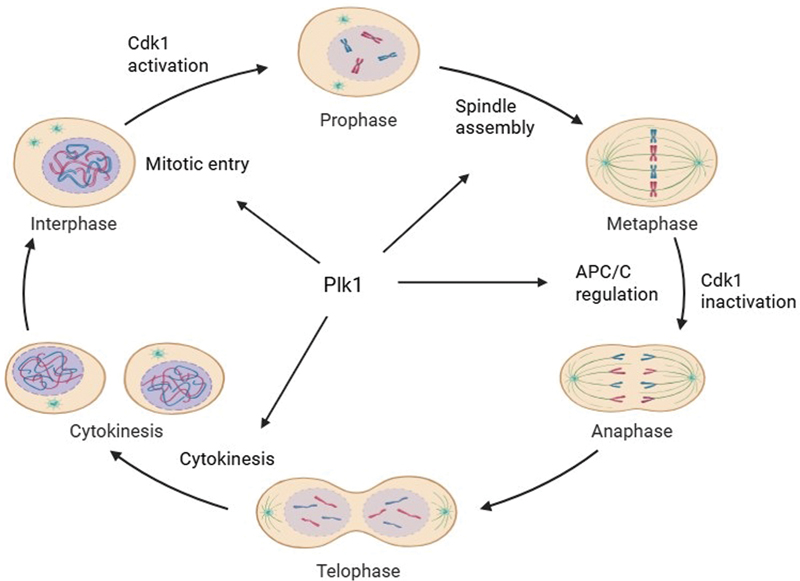
Fig 1: Role of polo-like kinase 1 (PLK1) in the regulation of mitotic progression during the cell cycle. (This figure has been redrawn and created by the authors based on the conceptual framework described in Gjertsen and Schöffski (2015)[3].)
Volasertib (BI 6727) is a selective, adenosine triphosphate–competitive inhibitor of PLK1 that exerts its antitumor effects primarily by blocking PLK1-mediated mitotic signaling.[3] [5] Treatment with volasertib results in accumulation of cells in the G2/M phase of the cell cycle, indicating mitotic arrest ([Fig. 2]). This arrest is followed by failure of proper chromosome alignment and spindle formation, leading to mitotic catastrophe and subsequent apoptosis.[5] Preclinical studies in AML cell lines have shown that volasertib induces a time- and dose-dependent increase in apoptotic cell death after prolonged mitotic arrest.[5]
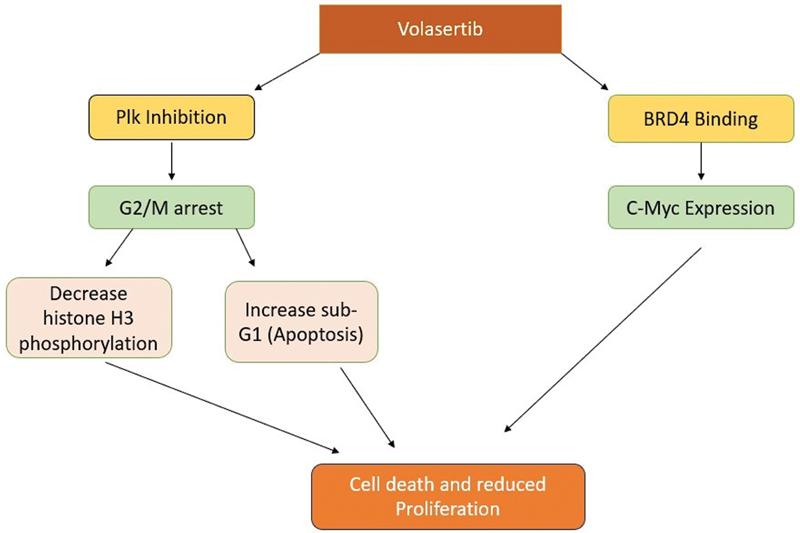
Fig 2: Mechanism of action of volasertib showing PLK1 inhibition–mediated G2/M cell-cycle arrest leading to apoptosis and reduced tumor cell proliferation. (Figure created by the authors.)
In addition to PLK1 inhibition, volasertib has been reported to exhibit weak binding to bromodomain-containing protein 4 (BRD4); however, this interaction occurs at much higher concentrations than those required for PLK1 inhibition and is unlikely to represent its primary mechanism of action.[5] Overall, the antitumor activity of volasertib is mainly attributed to disruption of PLK1-driven mitotic processes, resulting in reduced cellular proliferation and induction of apoptosis in cancer cells. This mechanism forms the biological basis for its evaluation in hematologic malignancies, particularly AML.
Clinical Evidence of Volasertib in Acute Myeloid Leukemia
AML is an aggressive hematologic malignancy, and treatment options are limited for elderly patients or those who are not suitable for intensive chemotherapy. PLK1 is frequently overexpressed in AML cells and plays a critical role in mitotic progression, making it a rational therapeutic target.[2] [8] Based on this rationale, volasertib was extensively evaluated in AML.
Preclinical studies demonstrated that volasertib induced G2/M cell-cycle arrest and apoptosis in AML cell lines, supporting its progression into clinical trials.[5] Early phase I studies established its safety profile and identified hematologic toxicities, including neutropenia and thrombocytopenia, as the main dose-limiting adverse effects.[6] Despite these toxicities, evidence of antileukemic activity was observed. Phase II clinical trials further evaluated volasertib as monotherapy and in combination with low-dose cytarabine in older, unfit patients with newly diagnosed AML. These studies reported higher remission rates and improved event-free survival with the combination regimen compared with low-dose cytarabine alone.[6] [7] Encouraged by these findings, volasertib advanced to phase III evaluation.
However, subsequent phase III trials failed to demonstrate a significant overall survival benefit, and increased hematologic toxicity limited its clinical utility.[7] Consequently, further development of volasertib in AML was largely discontinued. Nevertheless, these studies provided important insights into the potential and limitations of PLK1 inhibition as a therapeutic strategy in AML.
Evidence in Solid Tumors and Pediatric Malignancies
In addition to AML, volasertib has been evaluated in several solid tumors and pediatric malignancies, although clinical evidence in these settings remains limited. Preclinical studies demonstrated antitumor activity of volasertib in breast, lung, and colorectal cancer models, primarily through induction of mitotic arrest and enhanced sensitivity to radiotherapy.[5] [9] [10] In solid tumor clinical trials, volasertib showed modest activity, with stable disease being the most common outcome.[6] [11]
Volasertib has also been investigated in pediatric cancers, including relapsed leukemia and advanced solid tumors. Phase I studies identified similar dose-limiting hematologic toxicities as seen in adults, while clinical responses were limited mainly to disease stabilization.[12] [13] Overall, although volasertib demonstrated biological activity in these malignancies, its clinical benefit outside AML was modest, and further development in these indications was not pursued.
Comparison with Other Polo-Like Kinase Inhibitors
PLK1 plays a central role in cell-cycle regulation and has therefore been explored as a therapeutic target in cancer treatment.[8] [14] [15] Several PLK inhibitors have entered clinical development, among which volasertib, rigosertib, and onvansertib have received the greatest attention, particularly in hematologic malignancies such as AML.[3] [6] Volasertib and onvansertib directly inhibit PLK1, resulting in mitotic arrest and apoptosis in rapidly dividing cancer cells, whereas rigosertib acts indirectly by interfering with RAS-related signaling pathways that influence PLK1 activity.[16]
Although volasertib demonstrated strong preclinical and early clinical activity, its clinical utility was limited by dose-dependent hematologic toxicity, including neutropenia and thrombocytopenia.[6] [7] In contrast, onvansertib is a newer and more selective PLK1 inhibitor with a shorter half-life and has shown a relatively improved safety profile in early-phase clinical studies.[17] [18] Rigosertib exhibits broader pathway inhibition but appears to have lower specificity for PLK1. Overall, while volasertib was instrumental in validating PLK1 as a therapeutic target, current research is focused on developing newer PLK1 inhibitors that offer improved tolerability while maintaining antitumor efficacy.
Combination Strategies and Safety Considerations
Combination approaches were explored to enhance the antitumor activity of volasertib and overcome the limitations observed with monotherapy. Preclinical and early clinical studies showed that combining volasertib with agents such as low-dose cytarabine or other targeted therapies could improve antileukemic activity by enhancing mitotic stress and apoptosis.[6] [7] However, these combinations were also associated with increased hematologic toxicity, particularly neutropenia and thrombocytopenia, which remained the major dose-limiting adverse effects.[6] [11] Overall, while combination strategies showed biological and early clinical promise, safety concerns limited their broader clinical application and contributed to the discontinuation of further development of volasertib.
Limitations of Volasertib Development
Despite encouraging preclinical findings and early clinical activity, the development of volasertib faced several important limitations. The most significant challenge was dose-limiting hematologic toxicity, including neutropenia and thrombocytopenia, which reduced its tolerability, particularly in elderly and frail patients.[6] [7] In addition, phase III clinical trials failed to demonstrate a clear overall survival benefit, limiting its clinical value.[7] These factors, combined with the narrow therapeutic window of PLK1 inhibition, ultimately led to the discontinuation of further clinical development of volasertib as a therapeutic agent.
Future Perspectives for Polo-Like Kinase Inhibition
Although the clinical development of volasertib was limited, inhibition of PLK1 remains a relevant therapeutic strategy in cancer.[19] The experience gained from volasertib has highlighted the importance of patient selection, dosing strategies, and toxicity management when targeting mitotic kinases.[3] [17] Future research is increasingly focused on developing newer PLK1 inhibitors with improved selectivity and more favorable safety profiles, such as onvansertib.[17] [18] In addition, combination approaches guided by molecular biomarkers may help identify patient populations most likely to benefit from PLK1 inhibition. Advances in understanding PLK1 biology and its interaction with other oncogenic pathways may also support rational combination strategies and reduce toxicity.[20] Overall, the lessons learned from volasertib continue to inform the development of next-generation PLK1-targeted therapies in oncology.[21]
Conclusion
Volasertib emerged as a promising PLK1 inhibitor with strong biological rationale and encouraging early clinical activity, particularly in AML. However, dose-limiting hematologic toxicity and the absence of a clear survival benefit in later-stage trials restricted its clinical development. Despite these limitations, volasertib played an important role in validating PLK1 as a therapeutic target. The insights gained from its development continue to guide the design of safer and more effective next-generation PLK1 inhibitors in oncology.
Conflict of Interest
None declared.
Acknowledgment
The authors sincerely acknowledge SMBT College of Pharmacy, Nandi Hills, Dhamangaon, for providing institutional facilities and academic support during the preparation of this article.
Authors' Contributions
A.L. and S.L. contributed to the concept and design of the study and were involved in manuscript preparation. V.P., S.Z., and R.W. conducted the literature search. All authors participated in manuscript editing and review and approved the final version of the article.
References
- Barr FA, Silljé HHW, Nigg EA. Polo-like kinases and the orchestration of cell division. Nat Rev Mol Cell Biol 2004; 5 (06) 429-440
- Renner AG, Dos Santos C, Recher C. et al. Polo-like kinase 1 is overexpressed in acute myeloid leukemia and its inhibition preferentially targets the proliferation of leukemic cells. Blood 2009; 114 (03) 659-662
- Gjertsen BT, Schöffski P. Discovery and development of the Polo-like kinase inhibitor volasertib in cancer therapy. Leukemia 2015; 29 (01) 11-19
- Wang K, Zhao D, Jin M. et al. Multigram-scale synthesis of volasertib, an inhibitor of polo-like kinases in clinical evaluation. Chem Pap 2024;
- Rudolph D, Impagnatiello MA, Blaukopf C. et al. Efficacy and mechanism of action of volasertib, a potent and selective inhibitor of Polo-like kinases, in preclinical models of acute myeloid leukemia. J Pharmacol Exp Ther 2015; 352 (03) 579-589
- Janning M, Fiedler W. Volasertib for the treatment of acute myeloid leukemia: a review of preclinical and clinical development. Future Oncol 2014; 10 (07) 1157-1165
- Bug G, Müller-Tidow C, Schlenk RF. et al. Phase I/II study of volasertib (BI 6727), an intravenous polo-like kinase (Plk) inhibitor, in patients with acute myeloid leukemia (AML): updated results of the dose finding phase I part for volasertib in combination with low-dose cytarabine (LD-Ara-C) and as monotherapy in relapsed/refractory AML. Blood 2011; 118 (21) 1549-1549
- Strebhardt K. Multifaceted polo-like kinases: drug targets and antitargets for cancer therapy. Nat Rev Drug Discov 2010; 9 (08) 643-660
- Wang B, Huang X, Liang H. et al. PLK1 inhibition sensitizes breast cancer cells to radiation via suppressing autophagy. Int J Radiat Oncol Biol Phys 2021; 110 (04) 1234-1247
- Van den Bossche J, Deben C, Op de Beeck K. et al. Towards prognostic profiling of non-small cell lung cancer: new perspectives on the relevance of polo-like kinase 1 expression, the TP53 mutation status and hypoxia. J Cancer 2017; 8 (08) 1441-1452
- Schöffski P, Awada A, Dumez H. et al. A phase I, dose-escalation study of the novel Polo-like kinase inhibitor volasertib (BI 6727) in patients with advanced solid tumours. Eur J Cancer 2012; 48 (02) 179-186
- Doz F, Locatelli F, Baruchel A. et al. Phase I dose-escalation study of volasertib in pediatric patients with acute leukemia or advanced solid tumors. Pediatr Blood Cancer 2019; 66 (10) e27900
- Abbou S, Lanvers-Kaminsky C, Daudigeos-Dubus E. et al; within the ITCC Biology and Preclinical Evaluation Committee. Polo-like kinase inhibitor volasertib exhibits antitumor activity and synergy with vincristine in pediatric malignancies. Anticancer Res 2016; 36 (02) 599-609
- Lens SMA, Voest EE, Medema RH. Shared and separate functions of polo-like kinases and aurora kinases in cancer. Nat Rev Cancer 2010; 10 (12) 825-841
- Strebhardt K, Ullrich A. Targeting polo-like kinase 1 for cancer therapy. Nat Rev Cancer 2006; 6 (04) 321-330
- Tarumoto Y, Lin S, Wang J. et al. Salt-inducible kinase inhibition suppresses acute myeloid leukemia progression in vivo. Blood 2020; 135 (01) 56-70
- Chiappa M, Petrella S, Damia G, Broggini M, Guffanti F, Ricci F. Present and future perspective on PLK1 inhibition in cancer treatment. Front Oncol 2022; 12 (June): 903016
- Ahn DH, Barzi A, Ridinger M. et al. Onvansertib in combination with FOLFIRI and bevacizumab in second-line treatment of KRAS-mutant metastatic colorectal cancer: a phase Ib clinical study. Clin Cancer Res 2024; 30 (10) 2039-2047
- Goroshchuk O, Kolosenko I, Vidarsdottir L, Azimi A, Palm-Apergi C. Polo-like kinases and acute leukemia. Oncogene 2019; 38 (01) 1-16
- Jackson JR, Patrick DR, Dar MM, Huang PS. Targeted anti-mitotic therapies: can we improve on tubulin agents?. Nat Rev Cancer 2007; 7 (02) 107-117
- Raab M, Becker S, Sanhaji M. Targeting polo-like kinase 1: advancements and future directions in anti-cancer drug discovery. Expert Opin Drug Discov 2024; 19 (10) 1153-1157
Address for correspondence
Publication History
Article published online:
18 March 2026
© 2026. The Author(s). This is an open access article published by Thieme under the terms of the Creative Commons Attribution License, permitting unrestricted use, distribution, and reproduction so long as the original work is properly cited. (https://creativecommons.org/licenses/by/4.0/)
Thieme Medical and Scientific Publishers Pvt. Ltd.
A-12, 2nd Floor, Sector 2, Noida-201301 UP, India
We recommend
- Trilaciclib: A Novel Approach to Mitigate Chemotherapy-Induced Myelosuppression in Cancer TreatmentMayank Kapoor, et al., TH Open, 2024
- t(8;21) Acute Myeloid Leukaemia Requires Active CCND-CDK4/6N Martinez-Soria, Journal of Pediatric Biochemistry
- Chronic myeloid leukemia: In pursuit of perfectionVishal Jayakar, South Asian Journal of Cancer, 2012
- GilteritinibHarini Raghunathan, et al., VCOT Open, 2025
- GilteritinibHarini Raghunathan, et al., The Thoracic and Cardiovascular Surgeon, 2025
- Src inhibition potentiates MCL-1 antagonist activity in acute myeloid leukemia<svg viewBox="0 0 24 24" fill="none" xmlns="http://www.w3.org/2000/svg">
</svg> Xiaoyan Hu, Signal Transduction and Targeted Therapy, 2025 - Advances in acute myeloid leukemia<svg viewBox="0 0 24 24" fill="none" xmlns="http://www.w3.org/2000/svg">
</svg> Laura F Newell, The BMJ, 2021 - Synergistic induction of mitotic pyroptosis and tumor remission by inhibiting proteasome and WEE family kinasesZhan-Li Chen, Signal Transduction and Targeted Therapy, 2024
- Treatment of multiple myelomaSeema Singhal, The BMJ, 2003
- Ossification centres in a radiograph of a child's elbowYun Chen, et al., The BMJ, 2012
Fig 1: Role of polo-like kinase 1 (PLK1) in the regulation of mitotic progression during the cell cycle. (This figure has been redrawn and created by the authors based on the conceptual framework described in Gjertsen and Schöffski (2015)[3].)
Fig 2: Mechanism of action of volasertib showing PLK1 inhibition–mediated G2/M cell-cycle arrest leading to apoptosis and reduced tumor cell proliferation. (Figure created by the authors.)
References
- Barr FA, Silljé HHW, Nigg EA. Polo-like kinases and the orchestration of cell division. Nat Rev Mol Cell Biol 2004; 5 (06) 429-440
- Renner AG, Dos Santos C, Recher C. et al. Polo-like kinase 1 is overexpressed in acute myeloid leukemia and its inhibition preferentially targets the proliferation of leukemic cells. Blood 2009; 114 (03) 659-662
- Gjertsen BT, Schöffski P. Discovery and development of the Polo-like kinase inhibitor volasertib in cancer therapy. Leukemia 2015; 29 (01) 11-19
- Wang K, Zhao D, Jin M. et al. Multigram-scale synthesis of volasertib, an inhibitor of polo-like kinases in clinical evaluation. Chem Pap 2024;
- Rudolph D, Impagnatiello MA, Blaukopf C. et al. Efficacy and mechanism of action of volasertib, a potent and selective inhibitor of Polo-like kinases, in preclinical models of acute myeloid leukemia. J Pharmacol Exp Ther 2015; 352 (03) 579-589
- Janning M, Fiedler W. Volasertib for the treatment of acute myeloid leukemia: a review of preclinical and clinical development. Future Oncol 2014; 10 (07) 1157-1165
- Bug G, Müller-Tidow C, Schlenk RF. et al. Phase I/II study of volasertib (BI 6727), an intravenous polo-like kinase (Plk) inhibitor, in patients with acute myeloid leukemia (AML): updated results of the dose finding phase I part for volasertib in combination with low-dose cytarabine (LD-Ara-C) and as monotherapy in relapsed/refractory AML. Blood 2011; 118 (21) 1549-1549
- Strebhardt K. Multifaceted polo-like kinases: drug targets and antitargets for cancer therapy. Nat Rev Drug Discov 2010; 9 (08) 643-660
- Wang B, Huang X, Liang H. et al. PLK1 inhibition sensitizes breast cancer cells to radiation via suppressing autophagy. Int J Radiat Oncol Biol Phys 2021; 110 (04) 1234-1247
- Van den Bossche J, Deben C, Op de Beeck K. et al. Towards prognostic profiling of non-small cell lung cancer: new perspectives on the relevance of polo-like kinase 1 expression, the TP53 mutation status and hypoxia. J Cancer 2017; 8 (08) 1441-1452
- Schöffski P, Awada A, Dumez H. et al. A phase I, dose-escalation study of the novel Polo-like kinase inhibitor volasertib (BI 6727) in patients with advanced solid tumours. Eur J Cancer 2012; 48 (02) 179-186
- Doz F, Locatelli F, Baruchel A. et al. Phase I dose-escalation study of volasertib in pediatric patients with acute leukemia or advanced solid tumors. Pediatr Blood Cancer 2019; 66 (10) e27900
- Abbou S, Lanvers-Kaminsky C, Daudigeos-Dubus E. et al; within the ITCC Biology and Preclinical Evaluation Committee. Polo-like kinase inhibitor volasertib exhibits antitumor activity and synergy with vincristine in pediatric malignancies. Anticancer Res 2016; 36 (02) 599-609
- Lens SMA, Voest EE, Medema RH. Shared and separate functions of polo-like kinases and aurora kinases in cancer. Nat Rev Cancer 2010; 10 (12) 825-841
- Strebhardt K, Ullrich A. Targeting polo-like kinase 1 for cancer therapy. Nat Rev Cancer 2006; 6 (04) 321-330
- Tarumoto Y, Lin S, Wang J. et al. Salt-inducible kinase inhibition suppresses acute myeloid leukemia progression in vivo. Blood 2020; 135 (01) 56-70
- Chiappa M, Petrella S, Damia G, Broggini M, Guffanti F, Ricci F. Present and future perspective on PLK1 inhibition in cancer treatment. Front Oncol 2022; 12 (June): 903016
- Ahn DH, Barzi A, Ridinger M. et al. Onvansertib in combination with FOLFIRI and bevacizumab in second-line treatment of KRAS-mutant metastatic colorectal cancer: a phase Ib clinical study. Clin Cancer Res 2024; 30 (10) 2039-2047
- Goroshchuk O, Kolosenko I, Vidarsdottir L, Azimi A, Palm-Apergi C. Polo-like kinases and acute leukemia. Oncogene 2019; 38 (01) 1-16
- Jackson JR, Patrick DR, Dar MM, Huang PS. Targeted anti-mitotic therapies: can we improve on tubulin agents?. Nat Rev Cancer 2007; 7 (02) 107-117
- Raab M, Becker S, Sanhaji M. Targeting polo-like kinase 1: advancements and future directions in anti-cancer drug discovery. Expert Opin Drug Discov 2024; 19 (10) 1153-1157